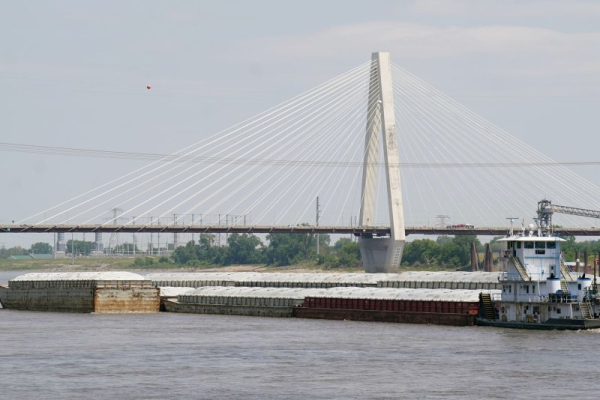


Soaking rain is forecast for wide areas of the central United States this week, which is good news for the drought-stricken Mississippi River (pictured in May in St. Louis). File Photo by Bill Greenblatt/UPI | License Photo
Soaking rainfall will converge on drought-stricken areas of the central United States this week and beyond, AccuWeather meteorologists say.
The needed rain is likely to provide a boost to the Mississippi River, which has reached historic lows in some places. Advertisement
Three weather systems will work together to bring a couple of rounds of rain this week from the southern Plains to part of the Upper Midwest, AccuWeather On-Air Meteorologist Bree Guy said.
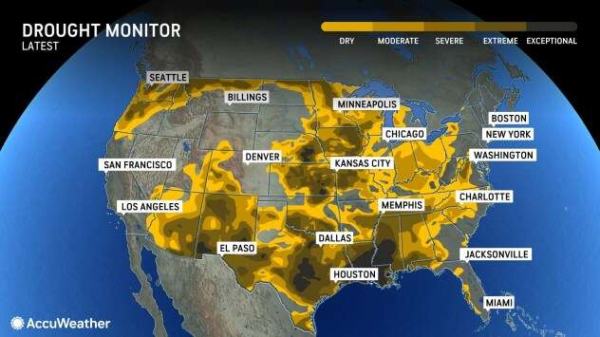
Severe to exceptional drought conditions are gripping large swaths of the Central states, according to the United States Drought Monitor.
|
|
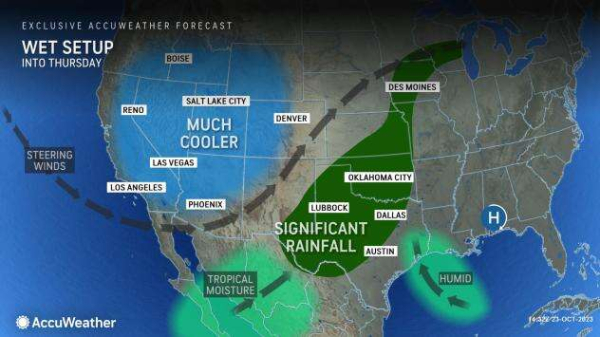
“Tropical moisture from Norma is already streaming northeastward from Mexico, while a dip in the jet stream continues to dive into the West and, as the week progresses, a cold front will drop slowly southward across the Plains,” Guy said.
Norma, once a major Category 4 hurricane while spinning over the East Pacific, struck the southern tip of Mexico’s Baja California Peninsula as a Category 1 hurricane on Saturday afternoon. It continued to lose wind intensity and weakened to a depression before making landfall along Mexico’s western coast on Monday morning. Advertisement
On Monday, areas of rain extended from the Big Bend area of the Rio Grande River to northeastern Texas. Most of the early-week rain is not expected to be heavy and should be mostly absorbed by the ground, even where the soil is naturally rocky or hard-packed by drought.
|
|
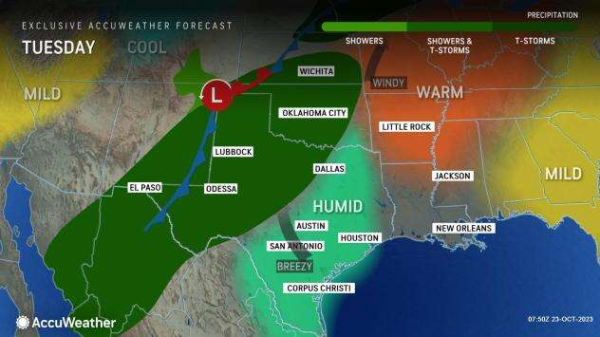
The rain will expand to the north and northeast over the Plains and will join up with rain from a front sagging into the Great Lakes region through Thursday, Guy explained. The dip in the jet stream over the West will help to pull some Gulf of Mexico moisture northward into the mix.
GET THE FREE ACCUWEATHER APP
- Have the app? Unlock AccuWeather Alerts&trade with Premium+
A general 1-2 inches of rain will fall into Thursday from much of central Texas, north to central Oklahoma, eastern Kansas, northwestern Missouri, eastern Nebraska, much of Iowa and Wisconsin, as well as southeastern Minnesota and much of northern Michigan. Because the majority of the rain will fall over one to three days, the ground will generally absorb it well with little runoff.
|
|
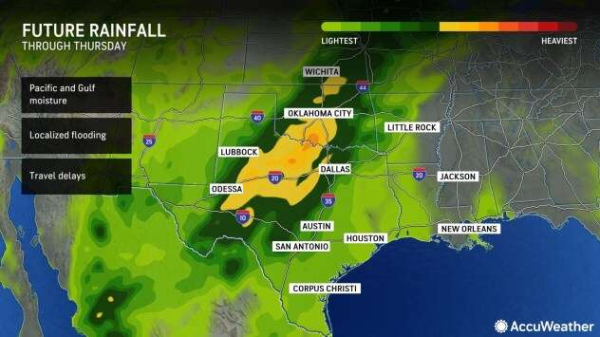
However, there will be some exceptions. A few pockets of 2-4 inches of rain will occur with locally higher amounts and may generate some runoff that will work its way into the progressively larger streams and rivers. In one to three weeks, there may be a several-foot rise on the main stem of the Mississippi River. Advertisement
Urban flooding incidents will be rare with this event, but a few downpours and blocked storm drains could lead to some isolated flash flooding.
|
|
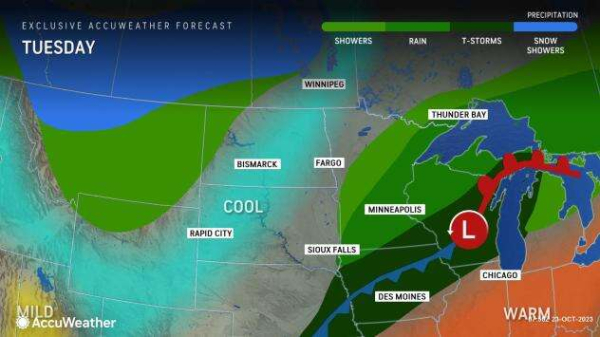
Looking farther ahead, a wave of much colder air will likely set up a noteworthy temperature boundary or front that will stall over portions of the Plains and Ohio Valley next week, AccuWeather Lead Long-Range Meteorologist Paul Pastelok said. That could be the trigger for another rain event.
“There is the potential for a thorough soaking in some areas next week that includes the Ohio basin,” Pastelok said, adding that the exact details, including the precise location and magnitude of the rainfall are not yet clear.
Following windblown snow and plunging temperatures near the headwaters of the Missouri River over the northern Plains and Rockies this week, another batch of snow may develop on the northern end of next week’s rain event over the Midwest.
|
|
A soaking rain that brings a couple of inches along the Ohio River could further boost Mississippi River levels as runoff from this week will continue to trickle downstream from the Upper Mississippi, Missouri and Arkansas rivers.
Water levels at Memphis, Tennessee, were hovering near minus 10 feet this week due to dredging operations and erosion that lowered the bottom of the river relative to the original gauge placement. The lower portion of the Mississippi River has been flirting with record low levels in recent months. A low flow rate relative to the historical average has allowed salt water from the Gulf of Mexico to creep upstream to the New Orleans area, where drinking water was being threatened. Advertisement
AccuWeather meteorologists began emphasizing that much-needed rain would return with potential drought relief since early last week.
Want next-level safety, ad-free? Unlock advanced, hyperlocal severe weather alerts when you subscribe to Premium+ on the AccuWeather app. AccuWeather Alerts&trade are prompted by our expert meteorologists who monitor and analyze dangerous weather risks 24/7 to keep you and your family safer.
Source
