



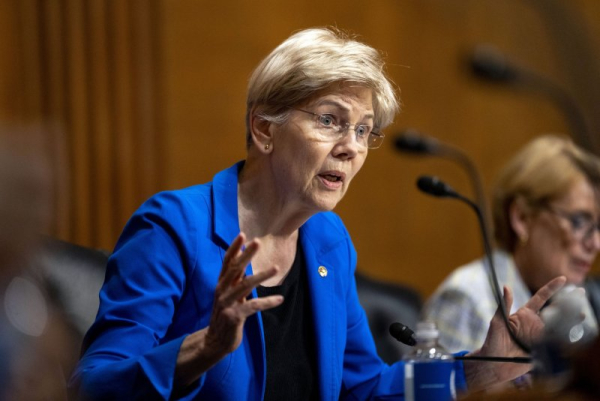
Sen. Elizabeth Warren, D-Mass., said Saturday that the ROAD to Housing Bill that she helped create, has passed without President Donald Trump’s signature. File Photo by Bonnie Cash/UPI | License Photo
A housing bill passed by Congress became law at midnight Saturday when President Donald Trump refused to sign it, but didn’t veto it.
The 21st Century ROAD to Housing Act is a comprehensive law that was designed to make housing more affordable and increase housing supply. Trump refused to sign it because he wanted Congress to pass the SAVE America Act, an election reform bill that would require those registering to vote to provide proof that they are U.S. citizens.
But Congress doesn’t have the votes to pass the SAVE Act.
On Friday, Trump announced that he again would not sign the ROAD to Housing bill.
“I will not sign the Housing Bill, which has been fully approved by Congress and sent to the White House, in PROTEST over the fact that the United States Senate is not capable of passing THE SAVE AMERICA ACT,” he said on Truth Social.
The housing bill includes measures that modernize building standards, encourage renovating older homes, encourage communities to build more housing with funding and grant programs, local governments to reform restrictive zoning policies around building housing and effectively ban private equity from buying up single-family homes. Critics of the bill say it doesn’t go far enough, but they acknowledge it’s a good first step.
“This bill becoming law is a genuine milestone — and I don’t use that word lightly,” Dennis Shea of the Bipartisan Policy Center told the BBC. “Getting Congress to move on housing supply and affordability has been a long time coming, and the American people made clear they were ready for it.”
Earlier this year, a BPC survey found that 89% of voters wanted congressional action to make housing more affordable.
Congressional leaders had planned a bill signing ceremony last month, ready to show voters that they are trying to bring down costs, a key issue to Americans. But hours before it was scheduled to begin, Trump canceled it.
Sen. Elizabeth Warren, D-Mass., criticized Trump’s ongoing refusal to sign Friday.
“At the stroke of midnight, a huge bipartisan bill to lower housing costs became law without the President’s signature. Why did President Trump sit on the landmark housing bill for more than 2 weeks? Maybe because there was nothing in it for him personally – no gold-encrusted ballroom, no Qatari jet, no $2 billion crypto deal. Nothing in the 21st Century ROAD to Housing except ways to make housing more affordable,” she said in a statement. “Donald Trump couldn’t pick up the pen because he just isn’t interested in lowering costs for American families.”
At 4 a.m. Saturday, she posted on X: “BREAKING: the clock struck midnight and our bipartisan housing bill is now law. Trump refused to sign it, but he couldn’t stop it.”
“This law is GROUNDBREAKING. It will build more housing, bring down costs, and for the first time, stop private equity from buying up homes,” she said.
Trump had called the housing bill “so unimportant” and “a yawn.”
Speaker of the House Mike Johnson, R-La., defended the bill without criticizing Trump’s comments.
He said, “the president has a lot going on, and I think it’s safe to say he’s not read through every line of that piece of legislation.
“What he was saying is in comparison to ensuring election integrity, which is now represented by the SAVE America Act, nothing is as important,” Johnson said. “That’s not to say that there are not also incredibly important issues, and the cost of living and affordability is among them. It’s top of mind.”
“So I hope he does sign it. If he doesn’t, it’s still law; we’ll still celebrate it,” Johnson said. “But he’s trying to make a point and I think he’s making it very effectively.”
This week in Washington
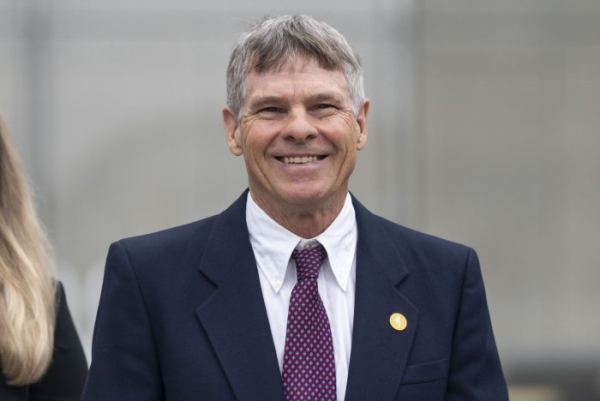
Olympic canoeist David Hearn departs the Moultrie Courthouse after pleading not guilty to damaging the Lincoln Memorial Reflecting Pool on Thursday. Hearn was indicted on July 2 on one count of destruction of property of more than $1,000 for allegedly damaging the Reflecting Pool, carrying a maximum penalty of 10 years in prison if convicted. Photo by Bonnie Cash/UPI | License Photo
