



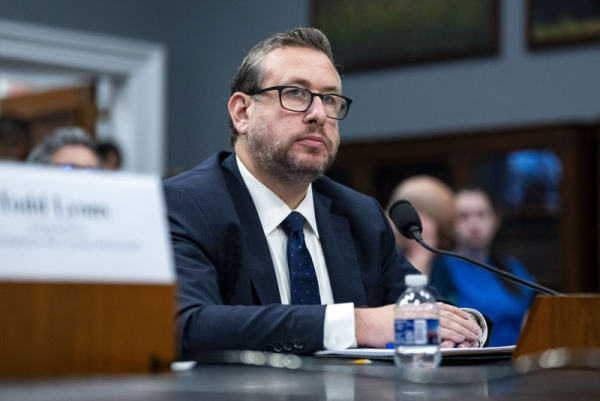
U.S. Citizenship and Immigration Services Director Joseph Edlow, pictured during a congressional hearing in April, announced on Friday that people in the U.S. on any kind of visa who want to apply for a greed card will have to leave the country to do so. Photo by Bonnie Cash/UPI | License Photo
U.S. Citizenship and Immigration Services announced Friday that people in the United States temporarily who want to apply for a green card will have to leave first.
USCIS said in a statement that people who have traveled to the United States on a temporary visa but want a green card to remain in the country permanently “must return to their home country to apply, except in extraordinary circumstances.”
The new requirement could make it more difficult to obtain permanent residency in the United States, and may lead to family separations and longer wait times, experts have said.
“This policy allows our immigration system to function as the law intended instead of incentivizing loopholes,” Zach Kahler, spokesperson for USCIS, said in the statement.
“When aliens apply from their home country, it reduces the need to find and remove those who decide to slip into the shadows and remain in the U.S. illegally after being denied residency,” Kahler said.
Kahler said that people visiting the country on visas for students, temporary workers or tourists “should not function” as the first step in the green card process.
The Christian humanitarian organization World Relief said in a statement that the change alters a “longstanding practice of allowing non-citizens who the United States lawfully and now qualify under U.S. law for lawful permanent resident status to ‘adjust status’ within the United States.”
There were about 1.4 million green cards granted in 2024, nearly 1 million of which were applied for and granted to people already residing in the United States, and at least 500,000 per year have received their cards the same way during the last two decades, The New York Times reported.
“Our consular processing system through which they would have to apply is already overburdened,” Sarah Pierce, a former policy analyst at USCIS, told The Times. “So that means we could have families separated for months or years.”
This week in Washington
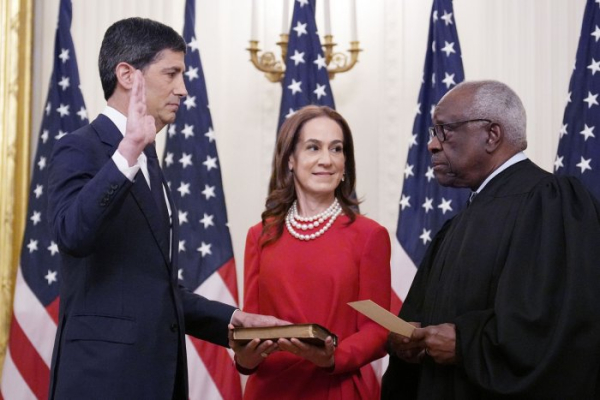
Kevin Warsh takes the oath of office as he is sworn-in as the new chairman of the Federal Reserve by Supreme Court Associate Justice Clarence Thomas in the East Room of the White House on Friday. Photo by Yuri Gripas/UPI | License Photo
