



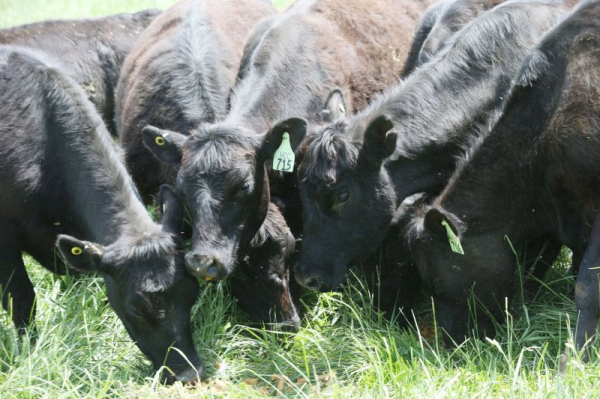
Nine cases of the flesh-eating fly called the New World screwworm have been detected in the United States as of Friday and what took decades to eradicate only took a few years to return. File Photo by Bill Greenblat/UPI | License Photo
Twelve cases of the flesh-eating fly called the New World screwworm have been detected in the United States as of Friday and what took decades to eradicate only took a few years to return.
Since first being detected in Texas earlier this month, the screwworm has spread to southeastern New Mexico, found in a dog. All 12 cases remain active.
The Cochliomyia hominivorax, also known as the New World screwworm, is a parasitic bloatfly that feasts on living tissue. It is the only species of bloatfly that feeds exclusively on living tissue.
“The best thing a rancher can do is put their eyes on their livestock,” Stephen Diebel, president of the Texas & Southwestern Cattle Raisers Association, told UPI. “The key to early detection is monitoring livestock and wildlife, knowing the signs and reporting suspicious cases immediately.”
The Texas & Southwestern Cattle Raisers Association joined 13 other trade organizations in forming the Screwworm Coalition of Texas to connect animal health officials with producers and share information on the screwworm.
“Most questions from ranchers and landowners have been around movement protocols in infested zones,” Diebel said. “Movement of livestock can happen from infested zones as long as livestock have passed an inspection from the Texas Animal Health Commission.”
Dr. Phillip Kaufman, professor and department head for the Department of Entomology at Texas A&M and chair of the university’s AgriLife New World Screwworm Task Force, told UPI the United States has been preparing for the reemergence of the New World screwworm for more than a year.
“We have taken advantage of every day we’ve been given,” Kaufman said. “We are going to win this battle. We’ve done this before.”
U.S. Department of Agriculture Secretary Brooke Rollins said the arrival of the screwworm in the United States was “As expected,” adding that the nation’s food supply is “100% safe.”
Kaufman echoed Rollins’ assurance of a safe food supply as well as the arrival of the screwworm coming as no surprise. The United States has charted the spread of the fly through Central America, arriving in Mexico in November 2024.
Prior to its crawl toward the southern border, the screwworm was considered contained in the jungles of the Darien Gap between Panama and Colombia. It remained contained in a “biological barrier,” Kaufman said, beginning in 2004. In 2022, it broke containment.
“In about two years it moved that distance,” he said. “That’s a distance when we did the eradication program, it took about 17 years to eradicate. It recolonized very, very quickly. Once it got to Mexico, the USDA [Animal and Plant Health Inspection Service] ramped up its efforts to contain and slow the fly.”
The United States declared the New World screwworm eradicated in 1966. Some cases still lingered but the screwworm was largely considered contained and beat back into Central America.
On June 3, that changed.
The first case of the New World screwworm in decades was detected in Zavala County, Texas, near the southern border. It was discovered in a 3-week-old calf, sparking a quarantine blocking cattle movement in the region.
Most of the active cases in the United States are in cattle. Along with one dog, goats in Edwards and Gillespie County, Texas, have also been identified as hosts.
As of Wednesday, Mexico had 2,021 active animal cases, including 30 active cases in the state of Coahuila, Mexico, on the U.S. border.
A single female New World screwworm can lay up to 300 eggs at one time or 3,000 eggs during its 10- to 30-day life cycle. They burrow into openings, including open wounds, the eyes, ears and genitals mostly of warm-blooded mammals. When the eggs hatch into maggots, they begin feeding on the flesh of the host. Birds can also be hosts, though it is less common.
“They burrow into living tissue and start eating it,” Kaufman said. “As they grow for five to seven days progressively larger they eat more and more tissue and can cause more and more damage. That’s one of the signs we ask people to look for. They’re leaving a lot of dead tissue behind that can then trigger some of those other bloatflies to lay eggs in the wound. The situation gets worse and worse.”
The method that has long been used to eradicate the New World screwworm is the sterile insect technique, created by Edward Knipling, an alumnus of Texas A&M and Iowa State University.
“The fly was deemed absolutely terrible so it was the focus of a lot of research back in the early 19002,” Kaufman said. “[Knipling] came to realize the female will only mate one time. When she mates with a male, she will never mate again. If she mates with a sterile male, the eggs never hatch. We call it reproductively killing her. She will continue to live but will not contribute to more maggot infestations.”
There are sterile fly production facilities in Panama, Mexico and Texas that raise flies for the purpose of combatting the New World screwworm. There are also two dispersal facilities in Mexico and one in Texas.
It is unknown how the screwworm breached the sterile fly biological barrier in the Darien Gap or how it entered the United States. This underlines the importance of livestock moving restrictions, Kaufman said.
The screwworm does not discriminate among warm-blooded animals. It may also lay eggs in wildlife like deer or feral swine.
The New World screwworm likely predated humans arriving in the Americas, Kaufman said. It earns its name for only being present in the “New World.”
“We have written record from the conquistadores that some of the people that came with them had experienced the fly, based on the description of what they wrote,” Kaufman said. “We know from other writings that the fly was in Texas in the 1840s.”
While the screwworm historically created challenges for livestock ranchers, Kaufman said dealing with its return will be different.
“One thing we didn’t have before was time,” he said. “We’ve had time to prepare.”
As for the calf that was the first case in the United States, Kaufman said he has met with the rancher who owns it and it is expected to make a full recovery.
