

President Donald Trump called the increase “a little glitch.”

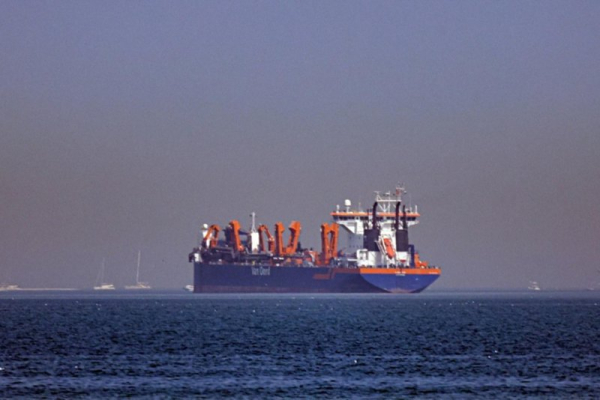
Iran has threatened vessels attempting to transit the Strait of Hormuz since the United States and Israel began its military operation in the country, which has sent the price of crude oil skyrocketing. File Photo EPA
After its largest increase since the early 1980s over the last week, futures trading on crude oil on Sunday surpassed $100 per barrel.
Just over a week into the U.S. and Israeli war with Iran, the price of oil passed $100 per barrel as Iran has threatened tankers attempting to pass through the Strait of Hormuz and launched attacks on refineries in nearby nations.
The jump, which followed the price passing $90 per barrel on Friday, has reached the $100 level for the first time since July 2022 after Russia invaded Ukraine.
Investors are raising concern as Gulf Arab states reduce production because without the ability to ship it — the Strait of Hormuz sees about 20% of the world’s oil supply pass through it — they are running out of space, CNBC and CNN reported.
In the United States, the effects of the war on the oil supply, which analysts have said depends entirely on how long the Strait risky to navigate, have started to hit American pocketbooks as gas prices are up 32 center per gallon, Politico reported.
In a post on Truth Social, President Donald Trump said that the increase in “short term oil prices” was a small price to pay for ending the regional threat Iran poses.
“Crude WILL go to $200, en route higher, unless traffic through the Strait resumes,” oil analyst Rory Johnston posted on X. “Not clickbait, but rather brutal physics and necessary economic incentives.”
Iraq, United Arab Emirates and Kuwait — the second-, third- and fifth-biggest OPEC producers of oil all have announced cuts to oil production and refinery output.
In an interview with ABC News, Trump called the increase in gas prices “a little glitch” and a “detour” as the White House looks to secure ships that need to travel the Strait, and his administration has said it is optimistic that tankers will resume their traffic as the U.S. and Israel take out Iranian military assets.
“We’re not too long before you’ll see more regular resumption of ship traffic through the Straits of Hormuz,” Energy Secretary Chris Wright told CNN on Sunday, saying that “worst case,” traffic will get back to normal in “a few weeks, not months.”
This week in Washington
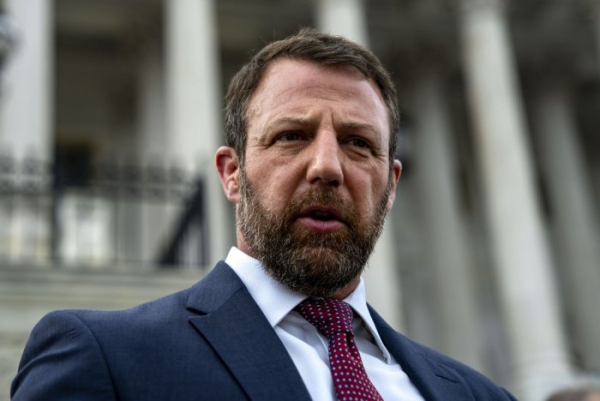
Sen. Markwayne Mullin, R-Okla., speaks to the press outside the U.S. Capitol on Thursday. Earlier today, President Donald Trump announced Mullin would replace Kristi Noem as Secretary of the Department of Homeland Security. Photo by Bonnie Cash/UPI | License Photo
