


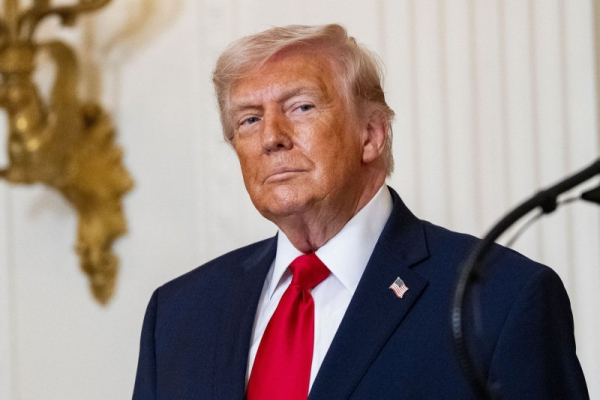
President Donald Trump is reportedly considering waivers to the 106-year-old Jones Act, which requires cargo on all shipping vessels to be owned and operated by 75% U.S. citizens, with the vessels registered in the United States, in order to ease rapidly rising gas and fuel prices. Photo by Bonnie Cash/UPI | License Photo
The Trump administration is considering temporary waivers of a 106-year-old maritime law as it battles rising gas prices as a side effect of the war in Iran.
The White House acknowledged that it is discussing waivers to the Jones Act — which requires cargo traveling between U.S. ports to be flagged in the United States, be at least 75% owned by U.S. citizens and be at least 75% crewed by U.S. citizens — as oil tankers and other shipments are blocked from crossing the Strait of Hormuz near Iran.
The administration said it is considering waiving the rule to allow foreign owned and operated oil and fuel tankers to move between ports in an effort to limit rising gas prices across the country, CBS News and Politico confirmed.
“In the interest of national defense, the White House is considering waiving the Jones Act for a limited period of time to ensure vital energy products and agricultural necessities are flowing freely to U.S. ports,” White House spokesperson Karoline Leavitt said in a statement sent to several media organizations.
She noted, however, that the action “has not been finalized.”
The Jones Act is part of the Merchant Marine Act of 1920, and was named for Sen. Wesley Jones, R-Wash., according to the non-profit Transportation Institute, which said the law was passed as much for national security as to protect the domestic economy.
The act includes four main requirements: That vessels are owned by U.S. companies that are at least 75% owned by U.S. citizens; that the vessels’ crews are at least 75% U.S. citizens; that vessels are built or rebuilt in the United States; and that the vessels’ are registered in the United States. The requirements apply to all 50 States, Alaska, Hawaii and Puerto Rico, according to the institute.
Since the United States and Israel launched attacks on Iran, the regime has targeted assets throughout the Middle East, including several of its neighbors — which includes national oil and gas assets, causing the market price of oil to skyrocket globally.
The Iranian regime also announced it was blocking the Strait of Hormuz — through which approximately one-fifth of the world’s oil and gas supply transits — and warned it would attack ships passing through the waters.
President Donald Trump called increasing gas prices in the United States, which in some cities has surpassed $5.00 per gallon, a glitch earlier this week, but newly anointed Iranian supreme leader Mojtaba Khamenei said in a statement on Thursday that the Strait will remain closed.
How high oil prices could rise globally, and gas prices could rise in the United States, will likely be tied to how long shipping lanes are blocked, experts told The Washington Post.
Several experts also told The Post that while Jones Act waivers are among the limited options a president has to affect oil and gas prices, the effect on wallets could be minor and likely not last long.
This week in Washington
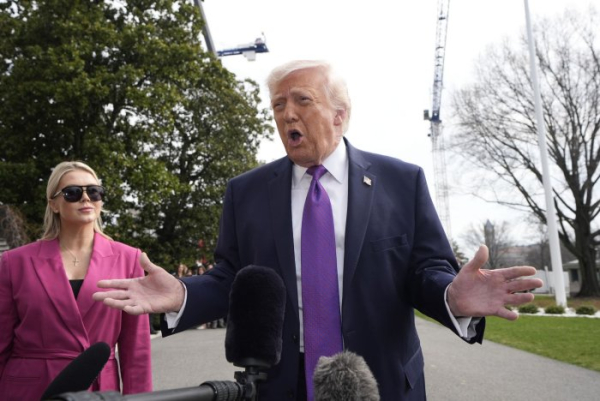
President Donald Trump speaks to the members of the media on the South Lawn of the White House before boarding the Marine One helicopter to Hebron, Ky., on Wednesday. Photo by Yuri Gripas/UPI | License Photo
