


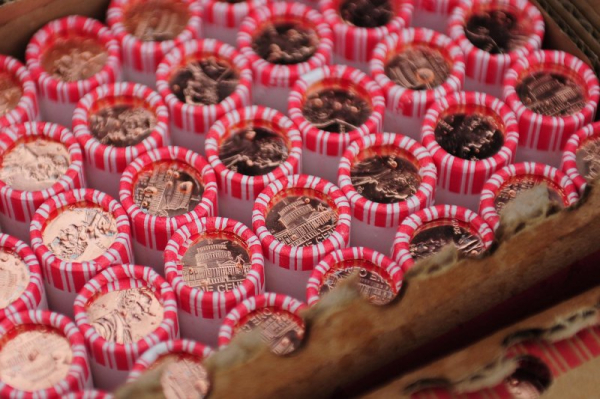
The last U.S. penny will be minted Wednesday in Philadelphia. File Photo by Kevin Dietsch/UPI | License Photo
The last penny will be minted Wednesday in Philadelphia, ending a 238-year run for the one-cent piece.
President Donald Trump in February ordered the Treasury Department to stop minting the coin, calling it wasteful.
“For too long the United States has minted pennies which literally cost us more than 2 cents. This is wasteful!” he said in a post on Truth Social. “Let’s rip the waste out of our great nations budget, even if it’s a penny at a time.”
While stopping the creation of new pennies will likely save the government money, in the long run it could cost more. If the Mint has to produce more nickels, that would raise costs even higher. In 2024, the cost of minting a nickel was 13.8 cents, CNN reported.
Though the penny was once valuable enough to buy things like candy or to help pay for purchases with change, it’s mostly accumulating in jars in people’s homes. The half-penny went out of production 168 years ago.
Though it will no longer be minted, the penny will continue to be legal tender.
“Some businesses are asking cash-paying customers to voluntarily round up for donations to avoid needing pennies to make change and to stay compliant with state and local laws, while other places are rounding down for everyone (not just cash payers),” said Brandon Sheridan, associate professor of economics at Elon University, in a statement, USA Today reported.
According to the American Banking Association, there are about 250 billion pennies in circulation.
A lack of guidance is also a challenge for life without pennies.
“By the time we reach Christmas, the problems will be more pronounced with retailers not having pennies,” said Mark Weller, executive director of Americans for Common Cents, a pro-penny group, to CNN. The organization is mostly funded by Artazn, the company that makes the blanks used to make pennies.
Weller said other countries that removed low-denomination coins gave guidance to retailers, which hasn’t happened in the United States.
“We had a social media post (by Trump) during Super Bowl Sunday, but no real plan for what retailers would have to do,” he said.
In food assistance programs like the Supplemental Nutrition Assistance Program, rounding up or down could get retailers into trouble. Recipients can’t be charged more than other customers. SNAP payments are charged exact amounts on cards, and if other customers pay in cash to a retailer that rounds down, legal issues could mount, said Jeff Lenard, spokesperson for the National Association of Convenience Stores, to CNN.
“Rounding down on all transactions presents several challenges beyond the loss of an average of 2 cents per transaction,” Lenard said. “We desperately need legislation that allows rounding so retailers can make change for these customers.”
